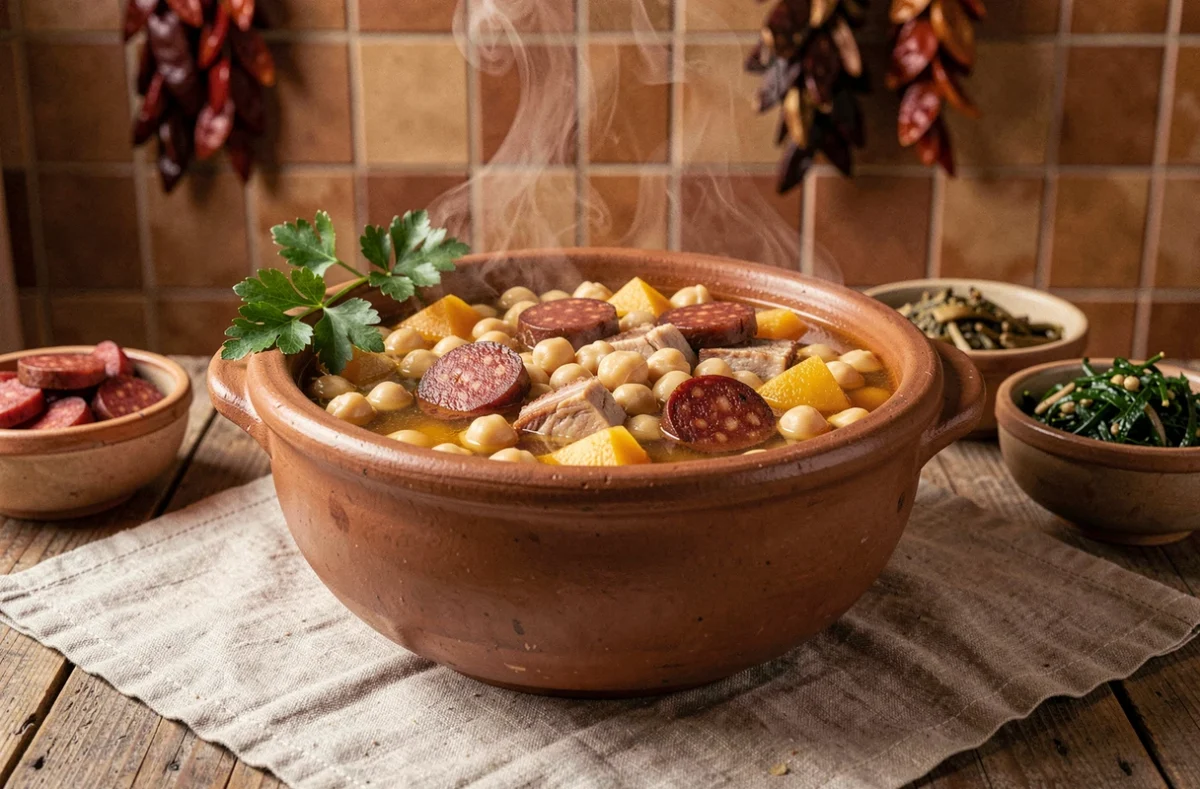
Spanish cocido stands apart from other European stews thanks to its three-course serving structure, known as the vuelcos. First comes the broth, followed by the vegetables and chickpeas, and finally the meats. This sequence requires precise cooking times and careful management of fat, both of which shape the final result. The question for today’s cooks is: can you lighten this dish without disrupting its three-course structure?
Classic cocido vs. lighter cocido: what changes in the pot
Madrid restaurants that put a fresh spin on cocido don’t change the ingredient list. Instead, they adjust two things: how the broth is defatted and whether certain ingredients are cooked separately. Comparing the two approaches shows what really changes.
| Factor | Classic cocido | Lighter cocido |
|---|---|---|
| Broth | Served with its layer of surface fat | Defatted when cold or by decanting |
| Meat cooking | Everything cooked together in the same pot | Cooked separately to control the texture |
| Chorizo and morcilla | Cooked in the broth for a long time | Added near the end of cooking to limit the amount of fat released |
| Cured meat portions | Generous, with several pieces per person | Smaller, with one thin slice per person |
| Three-course vuelcos | Preserved | Preserved |
| Ingredient sourcing | Rarely highlighted | The origin of the chickpeas and meats is listed |
Both versions still follow the same sequence: broth, vegetables, then meats. The order of the vuelcos stays the same, even in a lighter version. What changes is how much fat makes its way into the cooking liquid and the size of the cured meat portions.
For a detailed recipe with the quantities for each ingredient, Madame Gertrude’s Spanish cocido recipe walks you through the process step by step.
How to defat cocido broth without losing flavor
The broth is the first vuelco. In traditional cocido, it carries the flavors of all the meats, bacon, chorizo, and marrow bones. The fat that rises to the surface after several hours of cooking holds some of those flavors.
The most reliable way to defat the broth is to make it the day before and refrigerate it overnight. The fat solidifies on the surface and can be removed with a knife or spoon. This method preserves the flavor, since the water-soluble aromas remain in the liquid.
Chorizo is another factor. When cooked for several hours, it releases a significant amount of spiced fat into the broth. Adding it only during the final hour of cooking reduces the amount of fat released, while the paprika still colors the liquid.
How defatting changes the first course
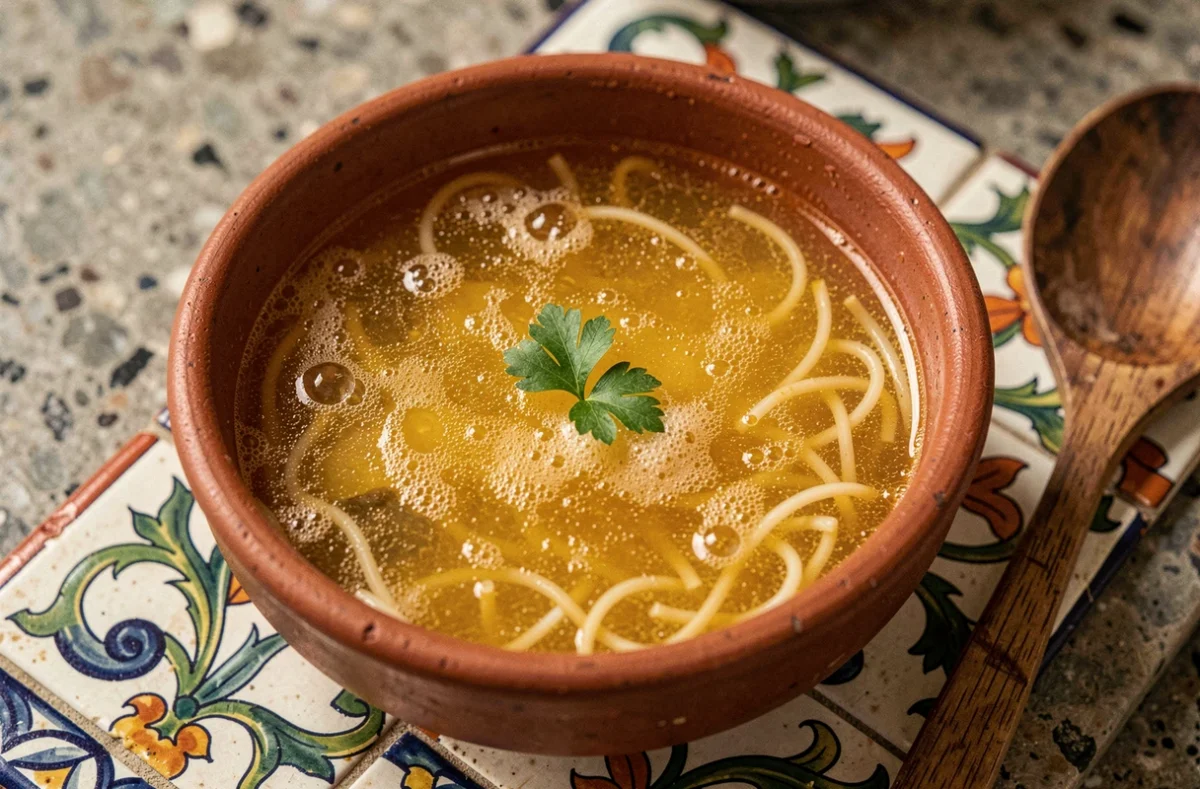
Defatted broth looks clearer, with almost no layer of fat on the surface. It still tastes rich if the bones and meats have simmered long enough. The difference is most noticeable on the palate: less greasy coating on the lips, with just as much aromatic depth.
Serving this broth with thin fideos (short vermicelli) or a little rice follows the tradition of the first vuelco. Some Madrid restaurants pair it with a glass of D.O.Ca. Rioja, a match that brings out the depth of the consommé.
Cooking meats separately: the technique that makes all the difference
Classic cocido is made in a single pot, with everything cooking together. This method is simple, but it subjects every ingredient to the same cooking time.
Professional cooks increasingly favor cooking meats separately to control the texture of each one. Beef shank, chicken, bacon, and bones simmer in the main pot. The chorizo and morcilla are added later or cooked separately in a little of the reserved broth.
- Beef shank needs several hours to become tender. It goes into the pot at the start, along with the marrow bones, to form the base of the broth.
- Chicken (or gallina, an older hen) adds gelatin to the liquid. It cooks in the same pot but is removed as soon as the meat comes easily off the bone.
- Added during the final hour, the chorizo and morcilla retain their texture and release less fat into the shared broth.
- The chickpeas, soaked the night before, cook in the main broth. Their starch helps give the liquid body.
This approach takes a little more planning, but it lets you serve each ingredient at its ideal level of doneness. The third vuelco is noticeably different: the meats have distinct textures instead of being uniformly soft.
Chickpeas and vegetables in cocido: adjusting the proportions
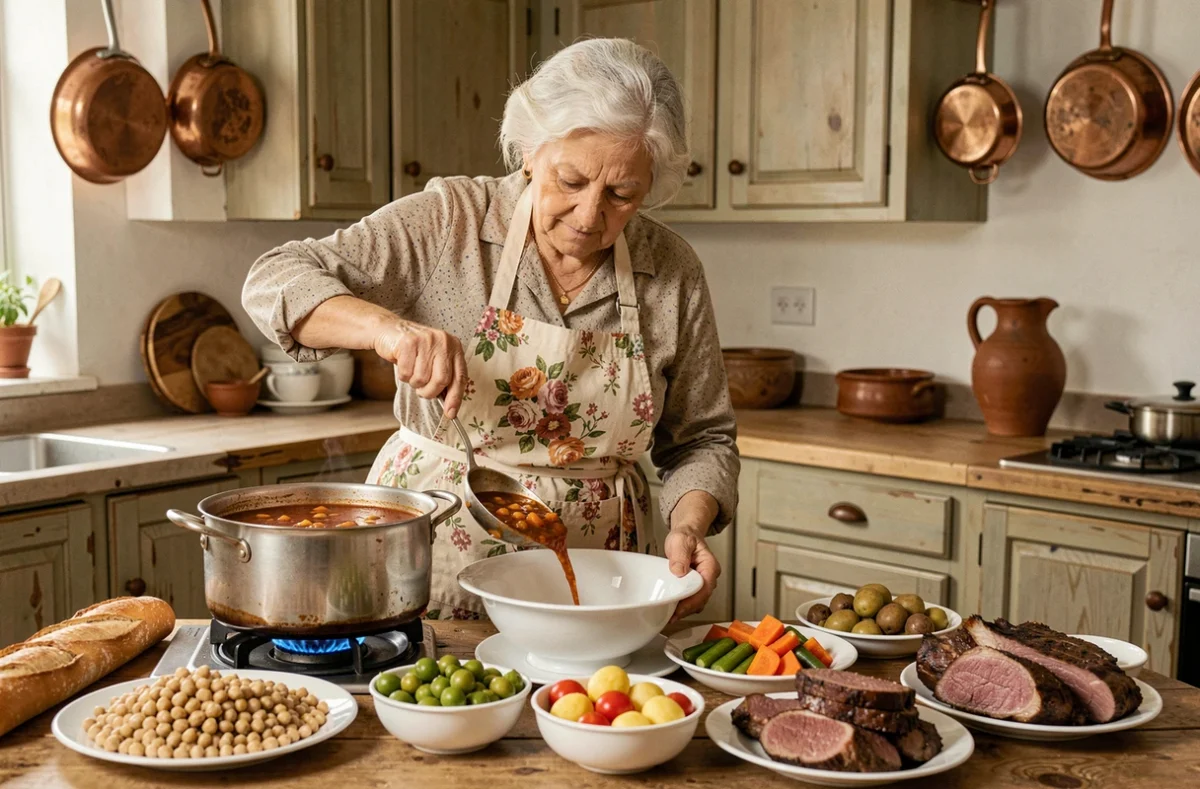
The second vuelco brings together chickpeas, potatoes, cabbage, carrots, and sometimes turnip. In a lighter version, the amount of chickpeas per serving is reduced slightly and balanced with more green vegetables.
The origin of the chickpeas has become a selling point in restaurant versions. Some establishments list the exact source of their legumes, since the size of the chickpeas and how well they hold their shape during cooking affect the result. Large chickpeas, soaked for at least one full night, stay intact after several hours of simmering.
Balancing the dish without changing its character
Reducing the portions of bacon and cured meats while keeping the vegetable serving generous is enough to make the meal lighter. Cabbage, blanched separately so it doesn’t overpower the broth, adds volume without unnecessary calories.
Lighter cocido is still a hearty dish. The difference from the classic version lies in the proportion of fat in the broth and the amount of cured meat per person, not in leaving out an ingredient.
Cocido works as a system: every ingredient contributes to the broth, and the broth in turn helps cook the ingredients that follow. Removing one component disrupts that balance. Adjusting quantities and cooking times preserves the logic of the three vuelcos while creating a dish in which fat no longer dominates the palate.