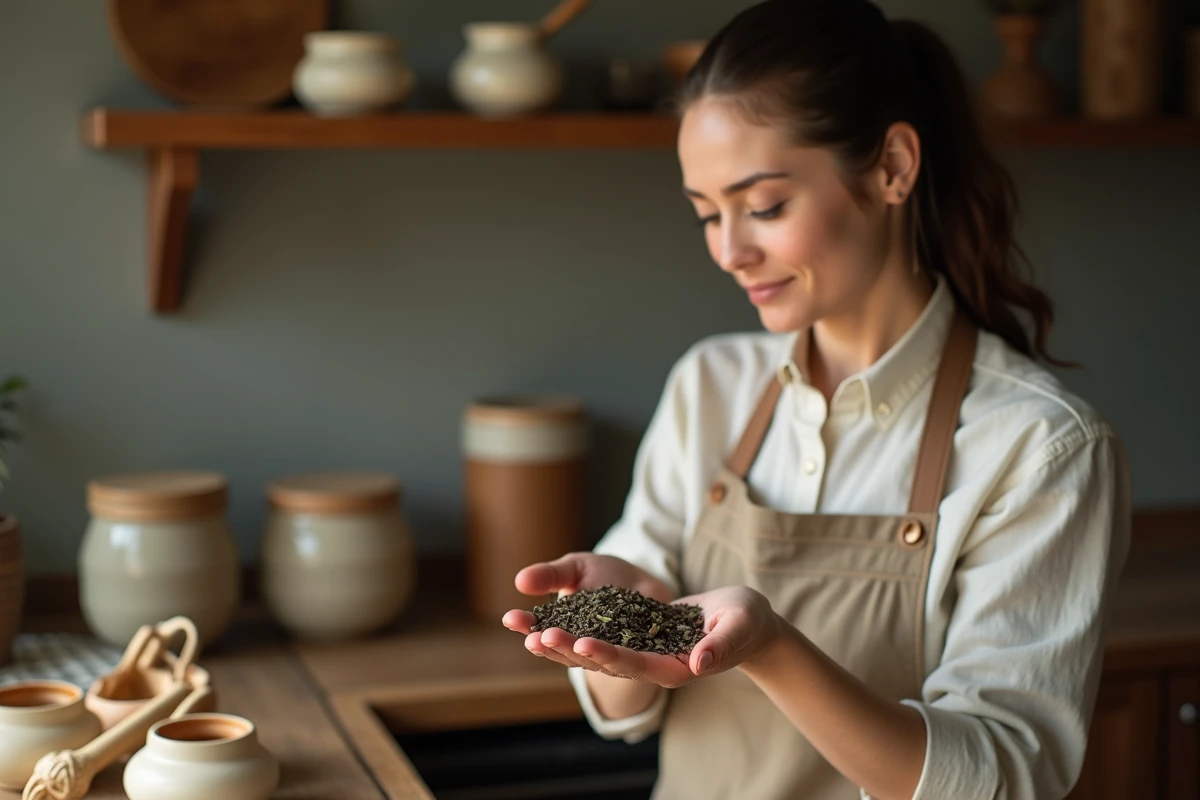
An exceptional organic tea is not just about a leaf grown without pesticides. The distinction lies in a precise triptych: the origin terroir, the controlled degree of oxidation after harvest, and traceability to the identified producer. Understanding these three parameters allows one to read a label, adjust preparation, and perceive aromas that standardized teas do not deliver.
Origin traceability and organic label: what differentiates an exceptional tea
The European organic label guarantees the absence of pesticides and synthetic fertilizers. It is a foundation, not a criterion of taste quality. Two certified organic teas can offer radically opposing aromatic profiles depending on their origin and processing method.
The current trend among specialized houses is to highlight the name of the producer, the plot, and the harvest season. This demonstrable origin traceability shifts perceived value: an organic tea whose high-altitude garden in Yunnan or precise cultivar in Darjeeling is known stands out from a generic organic blend assembled without geographical indication. Houses like lejardindegaia.fr structure their catalog around this short supply chain logic, linking each lot to its producer.
The European regulation on deforestation (EUDR, regulation 2023/1115) adds an additional layer. Although it does not directly concern the organic label, it requires importers to prove that their raw materials do not come from deforested areas. For tea, this reinforces the requirement for origin documentation and benefits transparent supply chains.
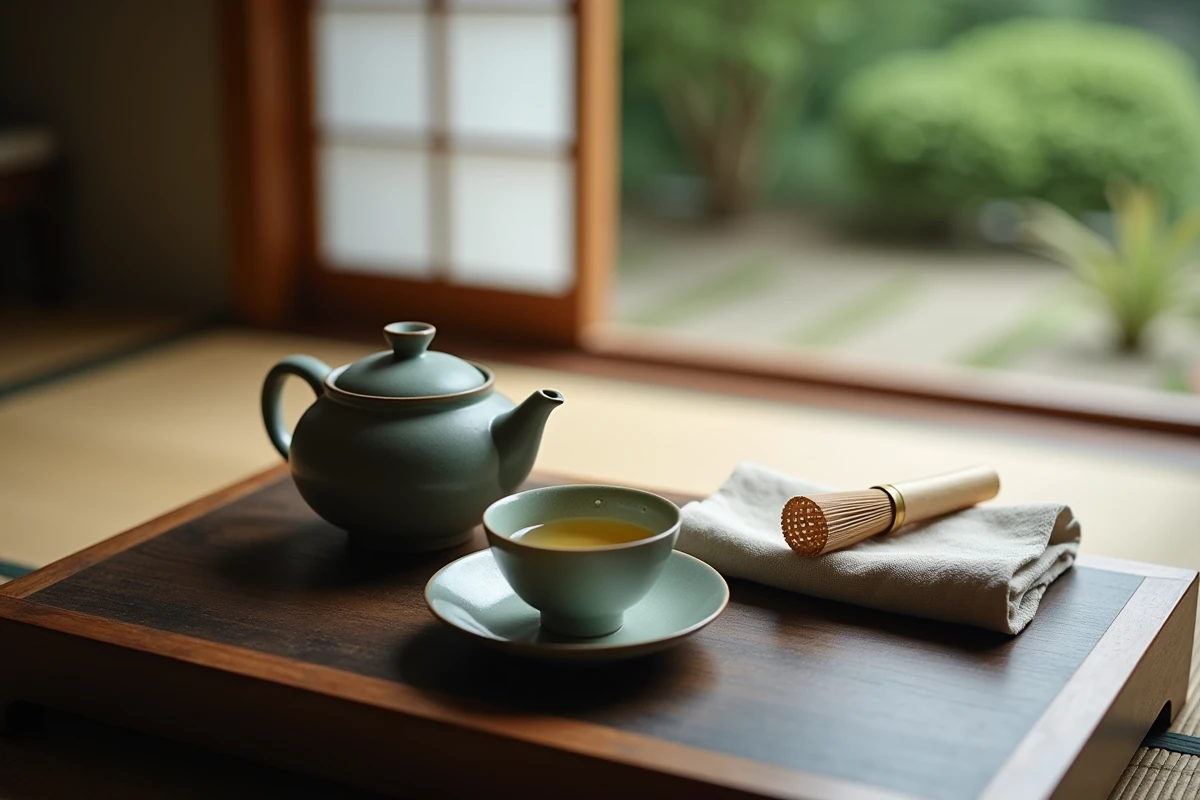
Oxidation and terroir: reading the families of organic tea
Oxidation is the technical parameter that separates green tea from black tea. After picking, the leaves begin to oxidize naturally upon contact with air. The producer controls this process, and it is this control that defines the tea family.
- The green tea is quickly heated after harvest to stop oxidation. It retains vegetal notes, sometimes iodized, and a light liquor color. Japanese green teas (sencha, gyokuro) and Chinese teas (longjing) illustrate two distinct heating schools: steam for Japan, wok for China.
- The oolong tea undergoes partial oxidation, between about one-quarter and three-quarters. This broad spectrum explains the diversity of this family: a lightly oxidized oolong resembles a floral green tea, while a heavily oxidized oolong approaches a black tea with notes of ripe fruits and honey.
- The black tea is fully oxidized. The leaves take on a dark hue and develop malty, woody, or cocoa notes. The grand cru teas from Darjeeling (India) and Yunnan (China) are among the references in organic.
- The white tea is the least processed: the buds and young leaves are simply withered and then dried. Its delicacy makes it a fragile product, whose quality directly depends on the freshness and care taken in drying.
The terroir comes into play at every stage. Altitude, soil type, humidity, and sunlight modify the concentration of polyphenols and amino acids in the leaf. The same cultivar planted at low altitude and in the mountains will not produce the same flavors, even under identical organic cultivation.
Tasting organic tea: the parameters that change the cup
Tasting an exceptional organic tea moves away from the standard infusion times printed on the boxes. Three variables determine the result in the cup: the water temperature, the leaf weight, and the infusion time. Each interacts with the others.
Water temperature according to the type of tea
A Japanese green tea requires water well below boiling, typically around 70 degrees. A black tea can handle water close to 95 degrees. For an oolong, the range depends on the level of oxidation: the more oxidized it is, the higher the temperature can go. White tea is prepared at a moderate temperature to avoid overpowering its subtle aromas.
Weight and multiple infusions
Exceptional teas lend themselves to successive infusions. Instead of preparing a single strong cup, the method involves using a higher weight in a small volume of water, then re-infusing the same leaves multiple times. Each pass reveals different facets. A quality oolong can withstand five to eight infusions, with a marked evolution between the first and last cup.
This approach, inherited from Chinese gongfu cha, values the whole leaf. It assumes the use of unbroken leaves, which excludes most bagged teas.
Storing organic tea: protecting aromas after purchase
An exceptional organic tea loses its qualities within weeks if storage conditions are poor. The main enemy is post-purchase oxidation, followed by humidity and surrounding odors.
The ideal container is opaque, airtight, and appropriately sized for the remaining volume. A metal box or an aluminum-lined bag with a zip works well. Tea should not be stored in the refrigerator (except for certain vacuum-sealed Japanese green teas), as condensation upon opening accelerates degradation.
Green and white teas are the most sensitive: their low oxidation makes them vulnerable to time. Black teas and highly oxidized oolongs tolerate storage better. Some fermented teas like pu-erh improve with age, but this category follows specific storage rules, in a ventilated environment and away from direct light.
The best reflex remains to buy in small quantities, directly from houses that document harvest dates. A spring organic tea consumed in the months following its harvest offers a liveliness that the same lot will not have a year later.