Transplanting a growing olive tree is almost guaranteed to result in failure. However, on certain projects, professionals move mature trees out of season, betting everything on meticulous preparation and precise actions to minimize damage. The gamble is risky, but not impossible.
It is not the age of the olive tree that weighs most heavily in the balance, but the way its root system is treated and the management of watering after relocation. Following a strict schedule offers no guarantees: each operation requires adapting to the environment and the vigor of the tree.
When is the best time to uproot an olive tree to maximize its chances of recovery?
The choice of transplanting period plays a decisive role, whether we are talking about an adult olive tree or a younger sapling. Experience shows that two key moments stand out: spring (from mid-March to mid-June, especially in areas where nights remain cool) and autumn (from September to November, where frost is not a concern). Outside of these windows, the tree endures stresses that jeopardize its future growth.
Recovery becomes uncertain as soon as the weather turns to frost, drought, or a sudden rise in sap flow. For a century-old olive tree, caution is essential: it will only tolerate one move, and only to a permanent location where the soil drains perfectly. These old specimens cannot withstand a second shock, and their restart is often slow, spread over several seasons.
In reality, the question of how to uproot and replant an olive tree is always linked to the calendar. You must wait for the soil to dry without becoming hard as stone, and choose a time when the tree is not forcing its sap, to best preserve the roots.
Here’s how to adjust the schedule according to the region:
- In the Mediterranean, the mild climate makes transplantation possible almost year-round, except in cases of frost.
- In colder regions, limit yourself to spring, when the olive tree’s growth resumes, or to autumn, just before the first cold snaps.
Everything relies on the patient observation of the plant and the rhythm of the seasons: this is the best guarantee of a successful olive tree transplant, without major loss.
Essential precautions before, during, and after transplantation
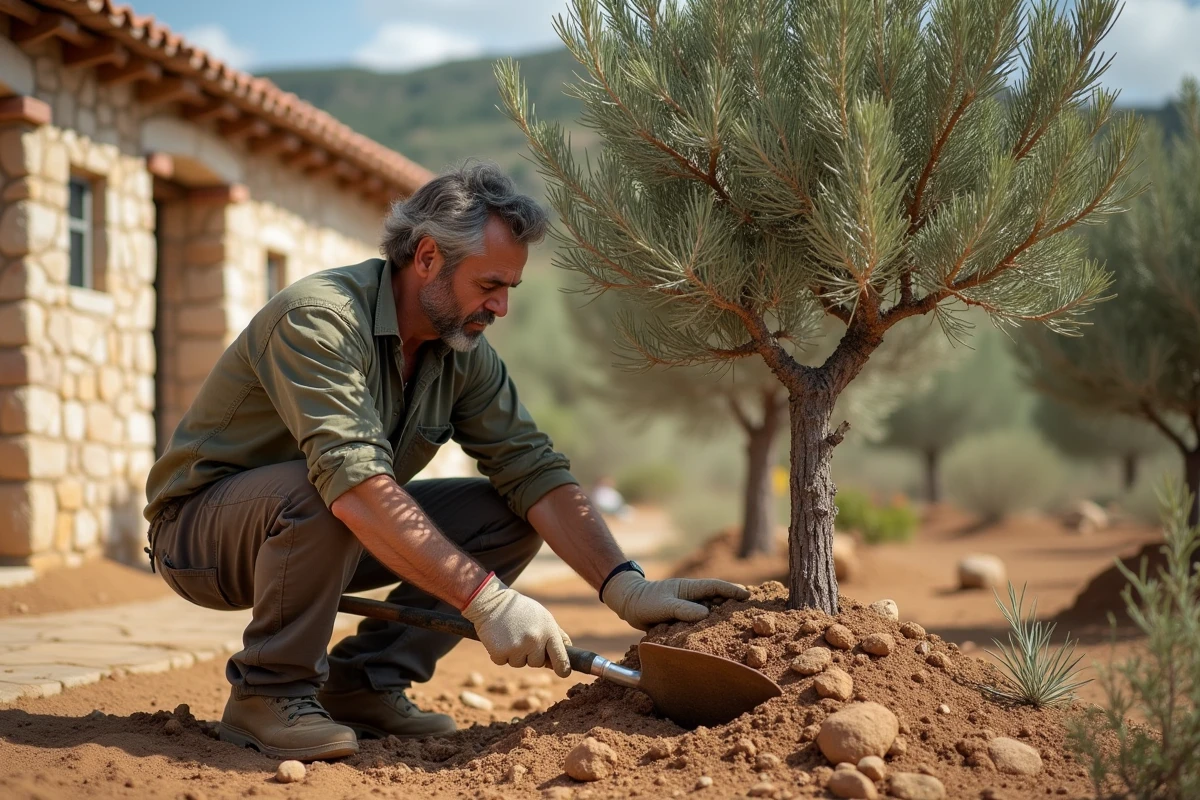
Protecting the root system should guide every action from the start. In the field, it is important to carefully clear the root ball, using a shovel or auger by hand, while creating a wide area around the trunk to retain as many roots as possible. For adult trees, a mini-crane is indispensable: straps and slings lined with rubber protect the trunk. A rough transport would irreparably weaken the tree.
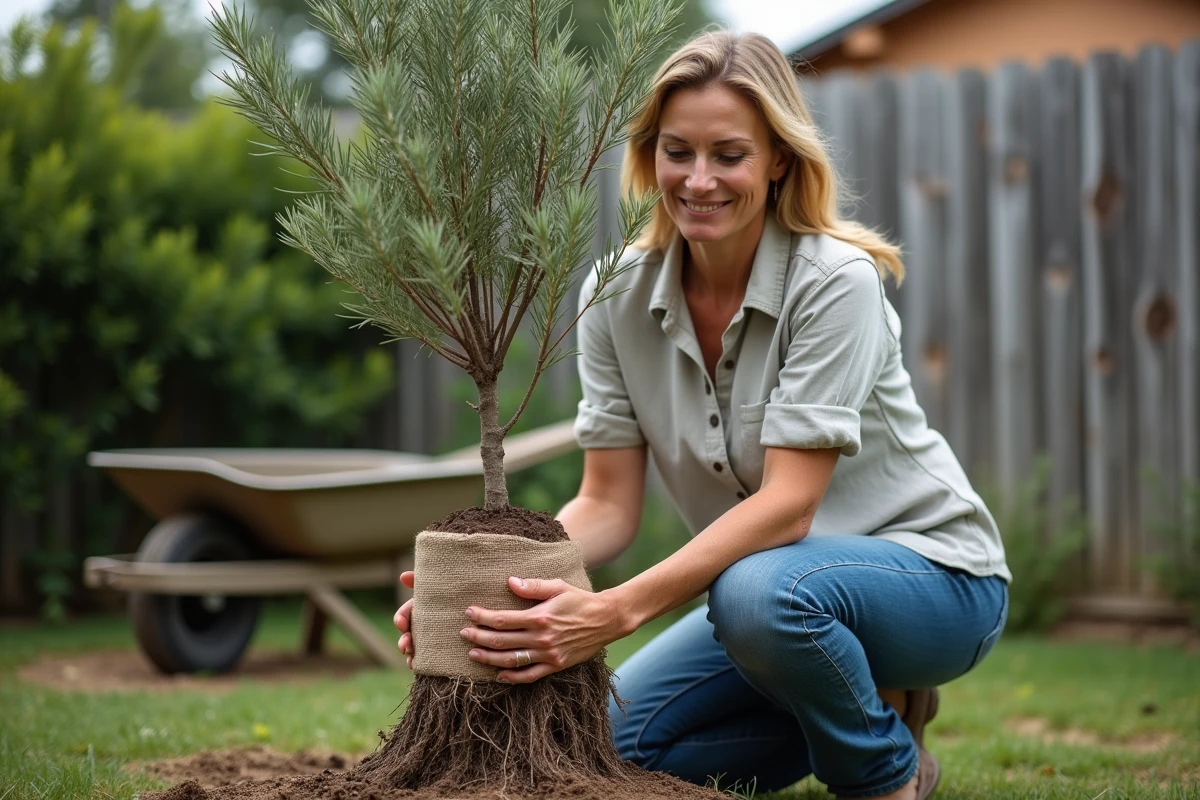
You must also prepare the planting hole methodically: width two to three times that of the root ball, depth suited to the size of the tree. At the bottom, a layer of gravel or pumice will ensure perfect drainage. The filling is done with a mixture of soil, sand, and compost, to which you can add well-rotted manure or ammonium phosphate according to local needs. If necessary, plan for good staking for young trees or those exposed to wind.
Once the tree is in place, lightly compact the soil and form a watering basin. Even an olive tree, accustomed to drought, needs a generous watering right after planting. Then monitor the recovery: if cold threatens, protect the foliage with a winter cover. It is in these first weeks that everything is at stake: root anchoring depends on your vigilance.
This protocol requires anticipation and regularity: it is the price to pay for the olive tree to root and develop sustainably.
Gardener tips for successful replanting and promoting recovery
A well-drained soil is essential if you want the olive tree to take root and thrive. Experienced gardeners avoid clay soils, which suffocate the roots. Preference is given to light, stony, or calcareous soil, with a pH between 6.5 and 7.5. Adding gravel or sand further refines drainage, a necessary condition for this hardy Mediterranean plant.
The location must be chosen scrupulously: full south, away from any shade cast by a tree or building, and at least five meters from constructions. Avoid proximity to lawns and water points. A small detail often makes the difference: orient the trunk north-south at the time of planting to limit burns and reduce recovery stress.
A pruning in spring encourages regrowth. Cut dead or damaged branches, aerate the crown to let light through, and slightly reduce the volume of foliage: this balances the root/branch ratio, weakened by uprooting. Regular application of suitable fertilizer, coupled with measured watering, supports rooting.
To create a favorable environment, associate the olive tree with other Mediterranean species: lavender, thyme, rosemary, blue fescue… This companionship improves the microclimate. Using mycorrhizae like Rizotech Plus or probiotics like Dualtech Activator Plus stimulates root activity. A treatment with sulfur or a specific fungicide protects the tree against fungi. You must also be willing to wait: an adult olive tree can take months to restart, but by following these practices, growth resumes on solid foundations.
Ultimately, moving an olive tree is not a trivial act: it is a bet on time, patience, and tenacity. Few trees tell as many stories once reinstalled in their new soil.