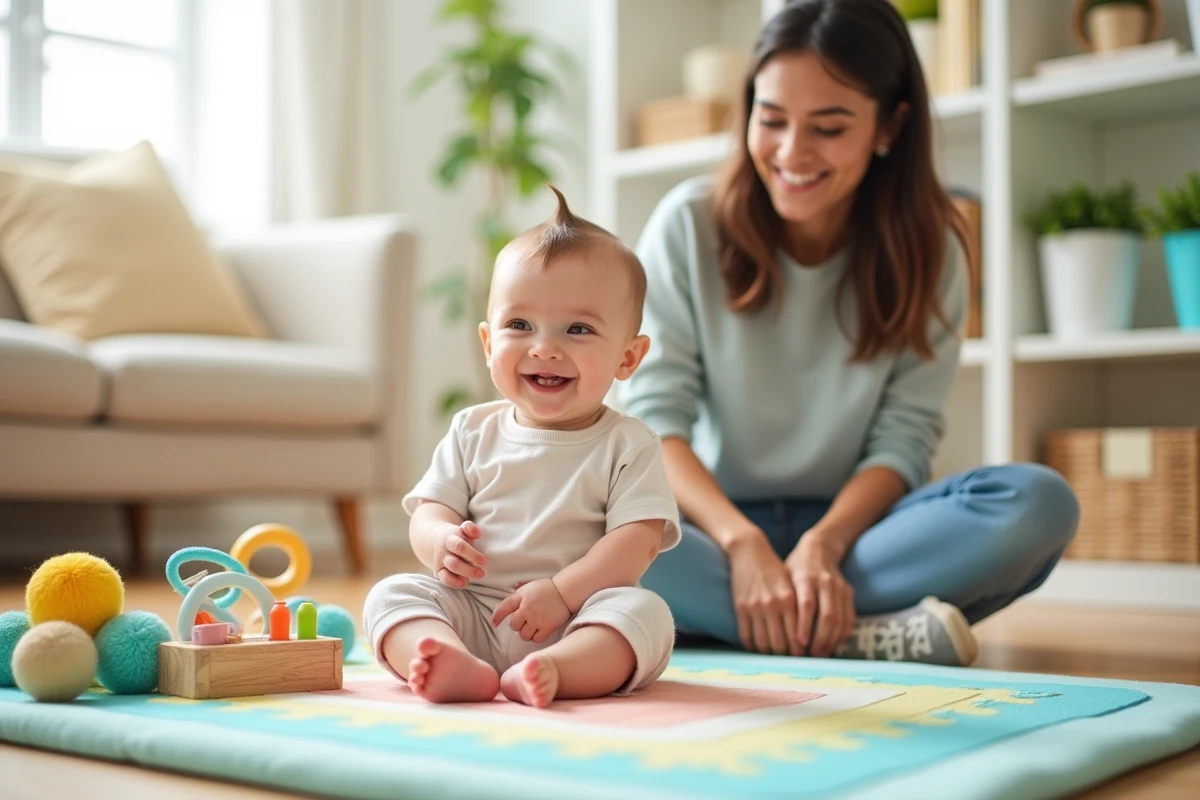
At 8 months, a baby gains mobility, starts to move by sliding on their bottom or crawling, and grabs objects with increasing precision. Their social curiosity explodes: they seek eye contact, imitate expressions, and babble while waiting for a response. Offering activities suited to this stage helps support their coordination, emerging language, and understanding of the world. Here are ten concrete activities to accompany this momentum.
1. Treasure Basket of Textures
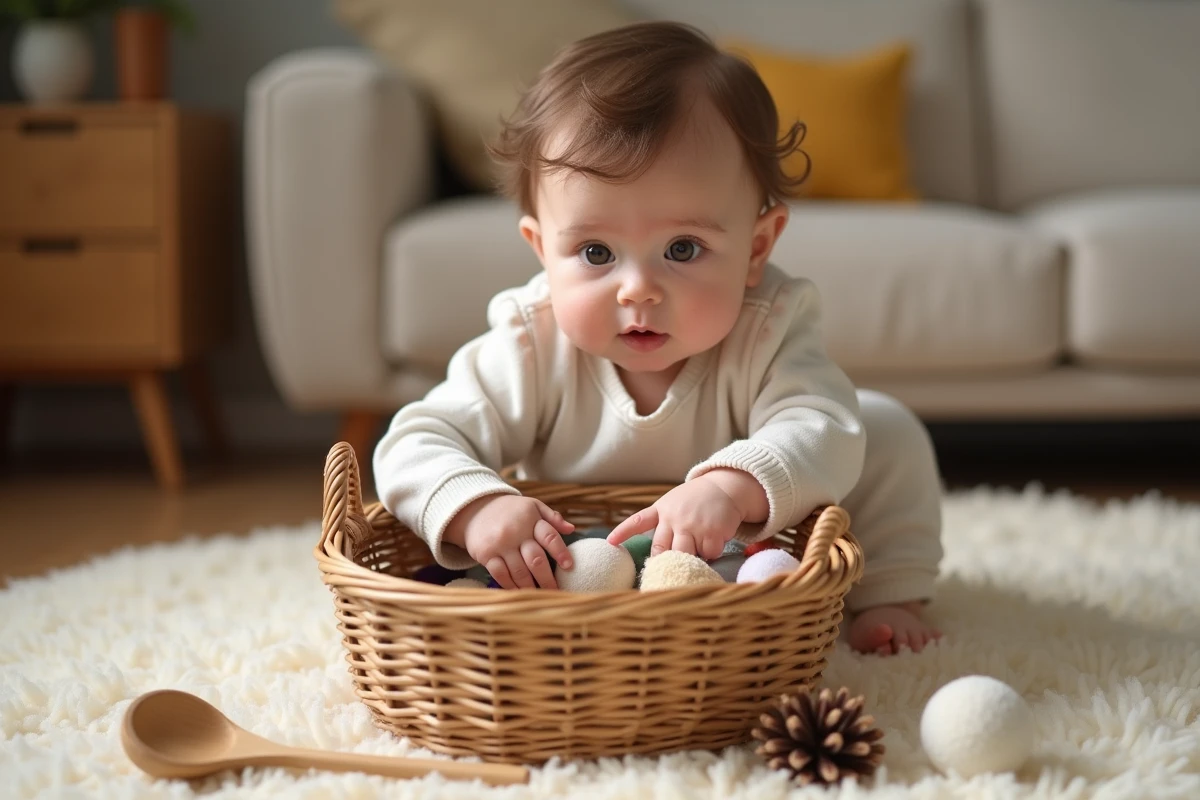
Gather about ten objects with varied textures in a wicker basket: wooden spoon, natural sponge, piece of velvet fabric, sanded pine cone, small metal whisk. The child picks, brings to their mouth, and compares sensations.
This type of free exploration engages fine motor skills and sustained attention without adult intervention. Let the baby manipulate at their own pace. Refresh the basket’s contents weekly to maintain interest.
If you’re looking for more activity ideas for 8-month-old babies, the treasure basket concept can easily be adapted with kitchen or bathroom items.
2. Narration During Daily Care

The report from the American Academy of Pediatrics emphasizes that micro-exchanges during care contribute to language development at least as much as structured play. Describing what you are doing while changing a diaper, dressing, or bathing transforms each gesture into a language interaction.
Name body parts, comment on the water temperature, and pause for a few seconds after a sentence to allow the baby to vocalize in response. This active waiting stimulates joint attention and the first attempts at communication.
3. Sensory Bottles to Shake
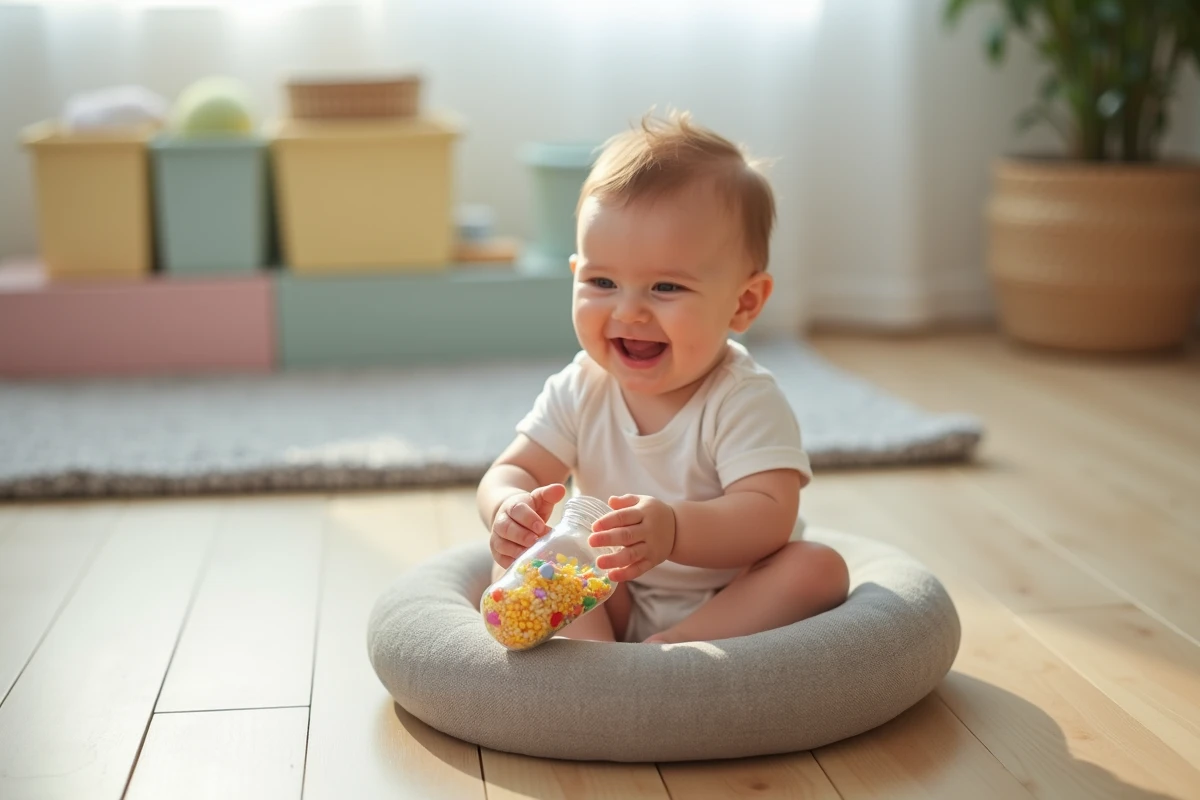
Fill small transparent plastic bottles with colored water, glitter, rice, or water beads. Seal the cap to prevent opening. The child shakes, turns, and observes the movement of the elements inside.
Hand-eye coordination improves with each manipulation. The baby also learns the cause-and-effect relationship: shaking produces sound, turning changes the visual movement. Offer two bottles with different contents for them to compare spontaneously.
4. Peek-a-Boo Game with Variations

Peek-a-boo remains a classic at 8 months because it works on object permanence, the ability to understand that something exists even when it is no longer visible. Hide your face behind a cloth, then behind a cushion, then behind a slightly open door.
Also vary the object that disappears: place a toy under an opaque cup and let the baby lift the cup. When they succeed, try with two cups. This gentle progression introduces problem-solving from the first year.
5. Mini Motor Course with Cushions

Arrange sofa cushions, a rolled blanket, a small fabric tunnel, or even an open cardboard box on the floor. The child crawls over, around, and under them.
This course strengthens gross motor skills and proprioception. The baby learns to adjust their posture in front of an obstacle, which prepares for the next stages of walking. Stay nearby without guiding their movements: independent exploration develops motor confidence.
6. Spoon Transfer Activity
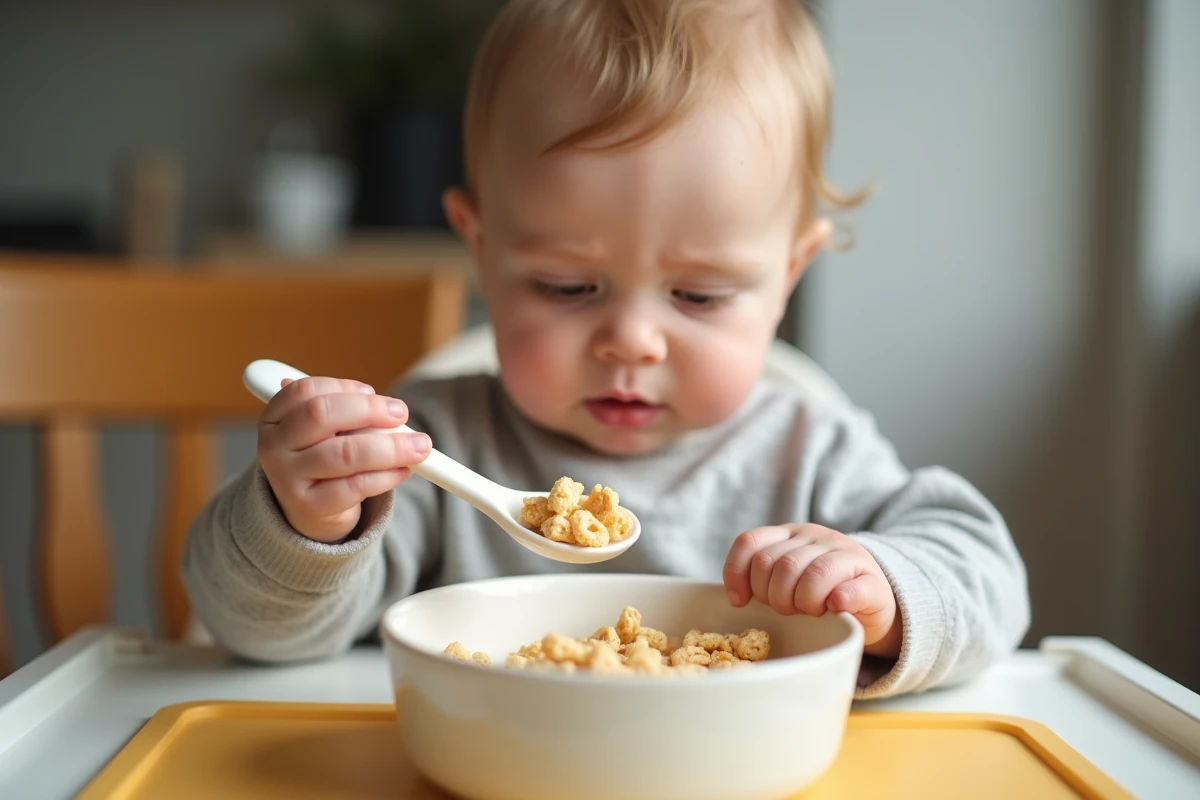
Seat the baby (supported if necessary) in front of two bowls. Fill one with large dry pasta or raw white beans. Give them a wooden spoon. The action of filling and emptying engages grasping, wrist rotation, and concentration.
Expect most of the pasta to end up on the floor: this is normal and part of the learning process. The transfer activity also prepares for self-feeding, as it trains the same spoon-to-mouth movement.
7. Action Songs with Pauses

Singing “Ainsi font font font” or “Bateau sur l’eau” while incorporating simple gestures allows the baby to start anticipating movements. Anticipation is a marker of cognitive development at this age.
Add pauses before the final gesture (the tipping in “Bateau sur l’eau,” for example). The child will smile, tense up, and sometimes initiate the gesture themselves. This waiting time stimulates working memory and strengthens the parent-child bond through shared enjoyment.
8. Exploration of Food Textures
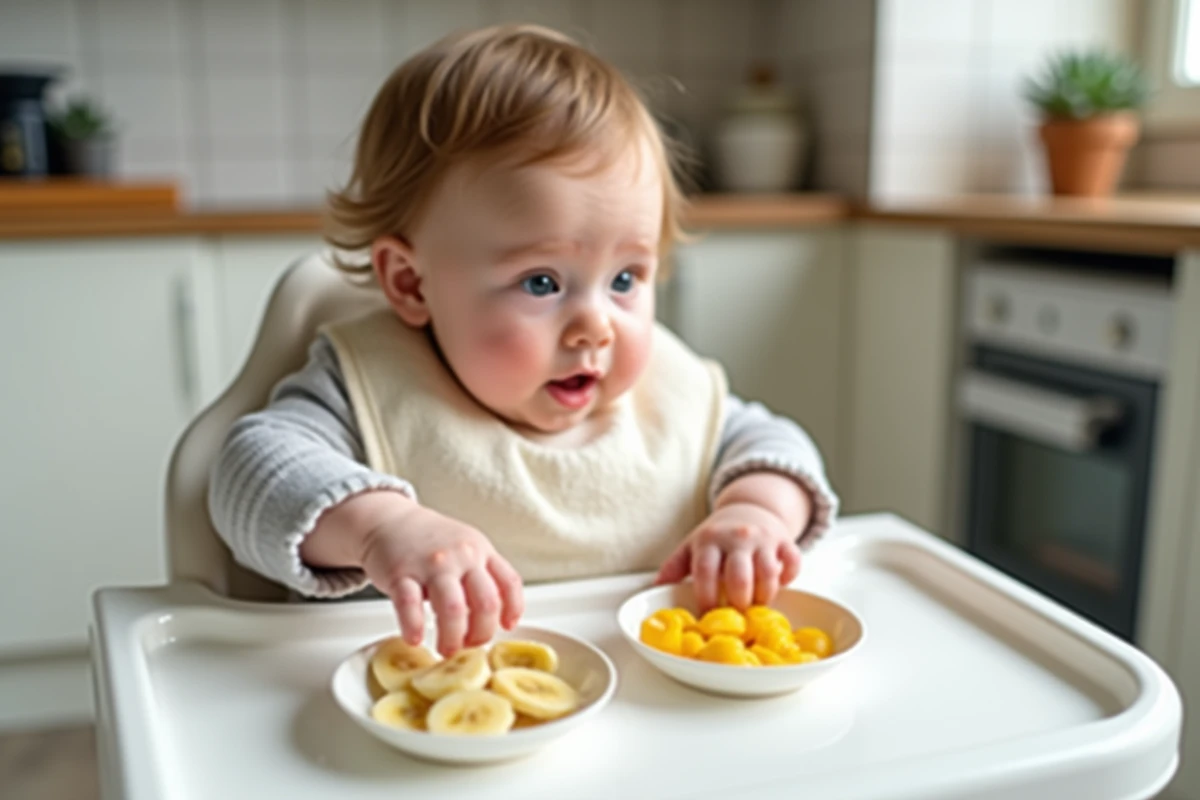
If complementary feeding is underway, offering foods with contrasting textures constitutes a full sensory awakening activity. Mashed banana, cucumber stick, wet oatmeal: each texture engages different tactile sensors in the mouth and on the fingers.
Tactile food exploration reduces resistance to new textures in the following months. Let the child touch, mash, and bring to their mouth without pressuring the amount ingested. The goal here is sensory, not nutritional.
9. Floor Mirror for Imitation
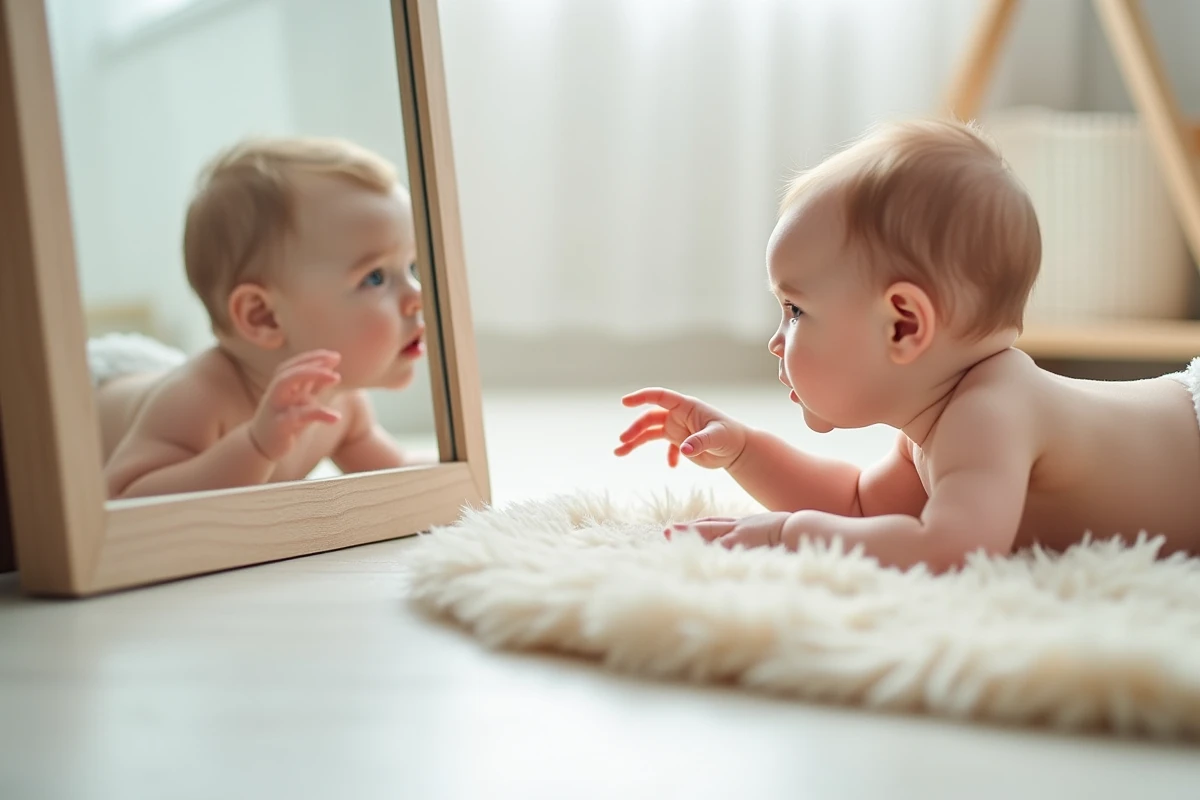
Place an unbreakable mirror (like a Montessori acrylic mirror) on the floor at the baby’s height. The child observes their reflection, touches the surface, and begins to imitate their own expressions. By 8 months, they do not yet recognize themselves, but the mirror triggers spontaneous social interactions.
Sit next to them and make faces in the mirror. The baby will try to replicate your facial movements, which works on the foundations of non-verbal communication. It’s also a good way to extend tummy time if you slightly tilt the mirror.
10. Object Permanence Game with Simplified Shape Box
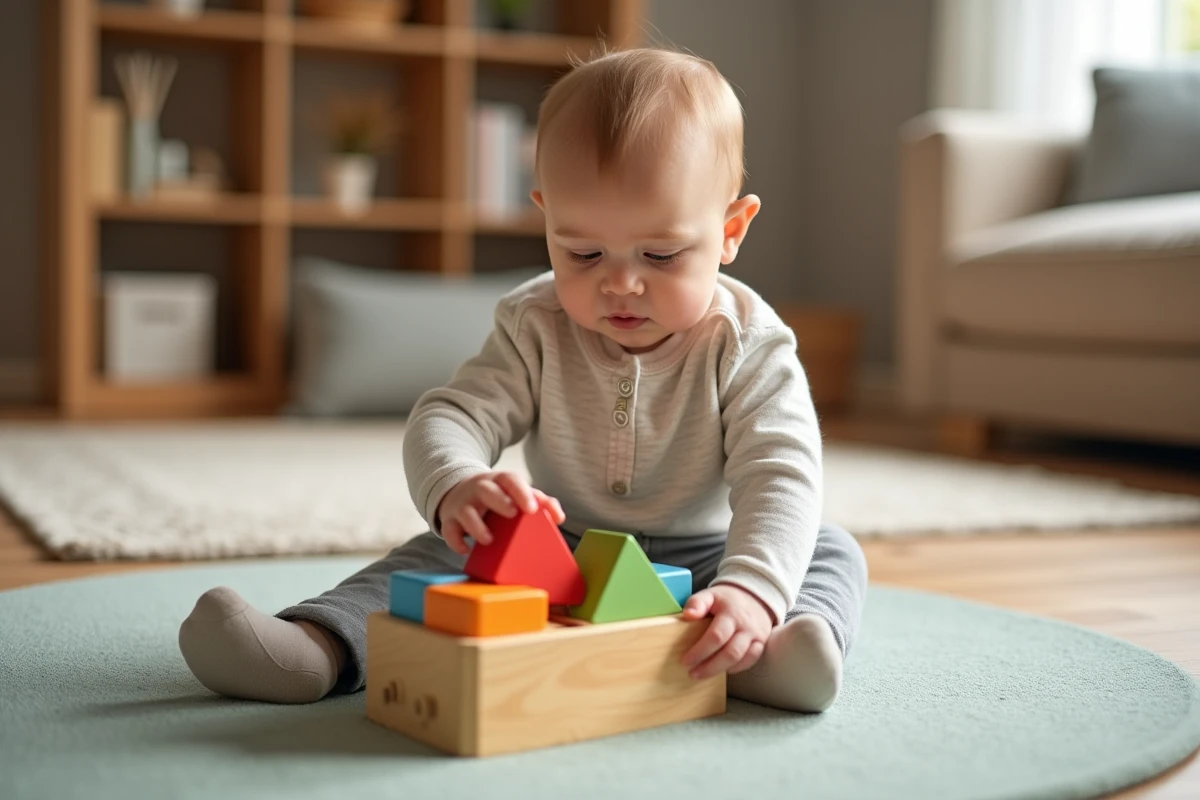
Take a closed shoebox and cut a round hole large enough for a tennis ball to pass through. The baby pushes the ball through the hole, sees it disappear, and then you open the box to show them that the ball is still there.
This activity extends the work on object permanence initiated by peek-a-boo, but with an external object. It also introduces a simple spatial logic: inside and outside. When the action becomes fluid, offer a square hole with a foam cube to add a degree of difficulty.
All these activities share a common point: they work best when the adult remains attentive and puts their phone away. Recent studies show that regular distraction of the parent by a screen during interactions leads to decreased reciprocity in exchanges and fewer vocalizations from the child. The quality of presence matters more than the quantity of activities offered.