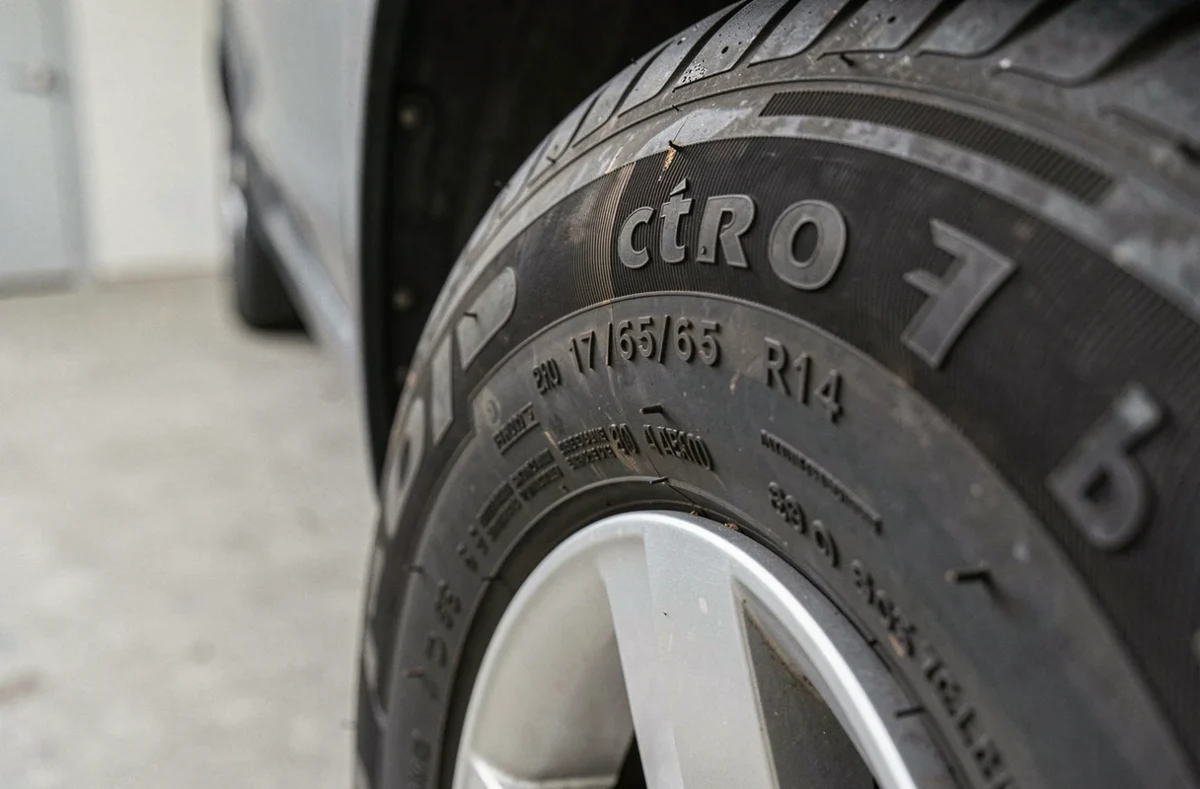
Choosing tires for a Citroën C2 is not just about noting the size printed on the sidewall of the tire in place. On a used vehicle produced between 2003 and 2009, the current fitment may not correspond to what the manufacturer has approved. The real reference is the vehicle documents, and the size alone is not enough: load indices, speed symbols, and axle consistency all come into play.
Certificate of conformity and manufacturer label: the only reliable sources
In the used car market, many C2s are running on replaced tires without checking for approval. The common reflex is to read the size on the worn tire’s sidewall and order the same reference. This shortcut can perpetuate an existing error.
The primary source is the European Certificate of Conformity (COC) for the vehicle. This document lists the sizes approved by Citroën for each engine type. The label affixed in the driver’s door frame and the user manual complement this information. Cross-referencing these three sources allows you to identify the sizes that are actually approved, and not just the one that was fitted at the last change.
Checking the dimensions and tire sizes for Citroën C2 remains a preliminary step before any purchase, especially when the vehicle has changed owners multiple times.
Approved dimensions by engine type on Citroën C2
Dimensions vary according to the engine type. Two C2s from the same year may require different tires if one is equipped with the 1.1 and the other with the 1.6 VTS. The table below summarizes the most common original fitments according to engine types.
| Engine Type | Original Size | Rim Diameter |
|---|---|---|
| 1.1 (60 HP) | 175/65 R14 | 14 inches |
| 1.4 (73 HP) | 185/55 R15 | 15 inches |
| 1.6 VTS (122 HP) | 195/45 R16 | 16 inches |
| 1.4 HDi (68 HP) | 175/65 R14 | 14 inches |
The 1.1 and 1.4 HDi engine types share the same original fitment of 175/65 R14. In contrast, the VTS version requires a significantly larger rim diameter and a lower profile, which alters the handling and comfort.

Fitting a size intended for the VTS on a 1.1 version (or vice versa) is not trivial: the load capacity and the maximum approved speed differ. This type of substitution can cause issues during technical inspections.
Load index and speed symbol: what the size alone does not tell you
An inscription like 175/65 R14 only describes the width, the aspect ratio, the structure (radial), and the rim diameter. Two additional pieces of information appear after these numbers: the load index and the speed symbol.
- The load index indicates the maximum mass that each tire can support. Fitting a tire with an index lower than that recommended by Citroën compromises safety, even if the geometric size is identical.
- The speed symbol (letter T, H, V, etc.) corresponds to the maximum speed that the tire can sustain. A symbol lower than the original is non-compliant, except for specific exemptions for winter tires in certain countries.
- These two values are listed on the COC and on the door label. They must be identical or at a higher level, never lower.
Buying a tire based solely on the “width/profile R diameter” format ignores half of the compatibility criteria. The complete tire inscription must be compared to the COC, not just its first three numbers.
Axle consistency: the rule that the technical inspection checks
The technical inspection does not just measure tread depth. It checks that the two tires mounted on the same axle have the same size, structure, type, and indices.
Mixing a summer tire and a winter tire on the front axle of the C2, or two references of different sizes, is a reason for a re-inspection. This issue is particularly common on small used city cars where only one tire has been replaced due to a puncture.
Replacing both tires on the same axle simultaneously remains the safest practice when one of them is significantly more worn. A marked difference in wear between the two tires on an axle can also become a regulatory issue, even before the legal wear indicator is reached.
Tire pressure: an adjustment related to load, not just to model
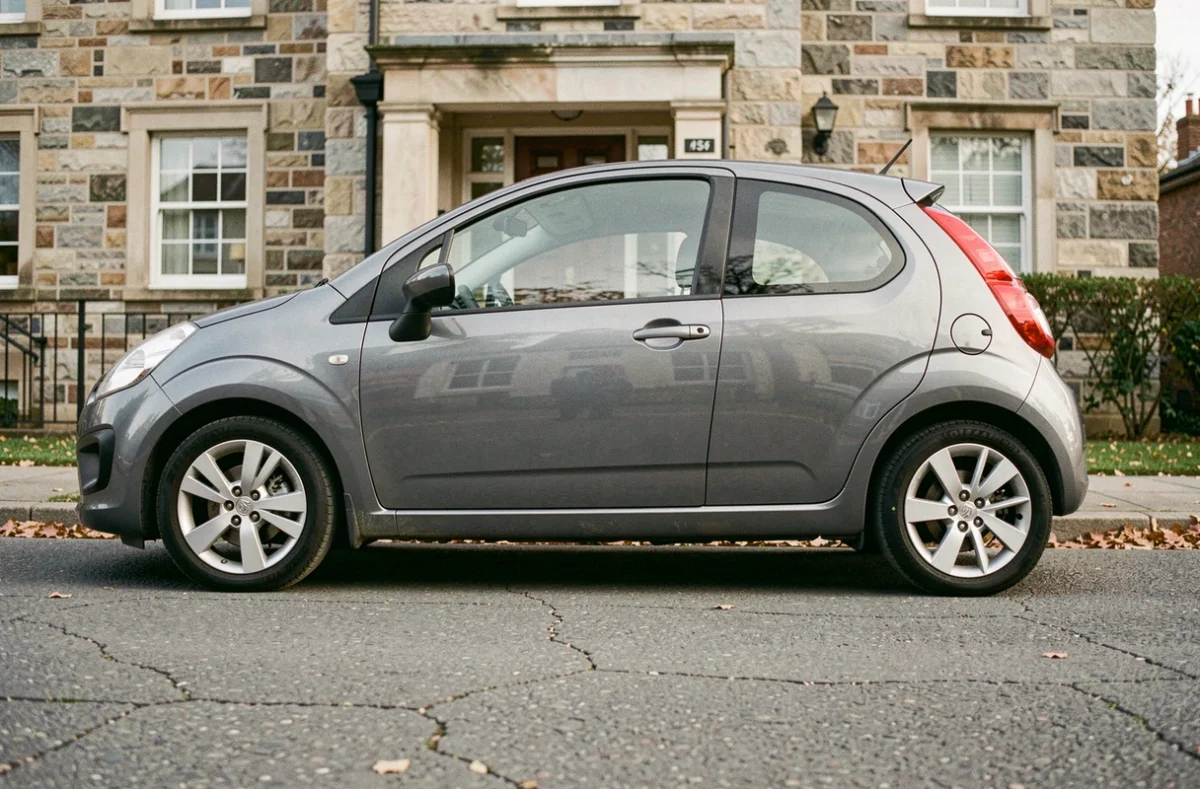
The recommended pressure for the C2’s tires is not a single number. It varies according to the vehicle’s load. The manufacturer label usually indicates two values: one for normal load (driver only or with one passenger) and one for maximum load (fully loaded vehicle with luggage).
- Too low a pressure accelerates sidewall wear and increases fuel consumption.
- Too high a pressure reduces the contact area with the ground and degrades grip, especially on wet surfaces.
- The check should be done when cold, before driving. After a few kilometers, the heat skews the measurement.
The correct pressure depends on the fitted size and the actual load, not just on the vehicle model. Two C2s equipped with different sizes (14 inches versus 16 inches) will not have the same reference values.
The last point to keep in mind: on a C2 over fifteen years old, the door label may be unreadable or detached. In this case, the COC or the user manual remains the only enforceable documents to find the correct pressure and size values.